
Facebook Case: The Reasoning
Summary of the reasoning of the German Bundesgerichtshof’s decision in Facebook (antitrust / data).
Summary of the reasoning of the German Bundesgerichtshof’s decision in Facebook (antitrust / data).
Actually, there are no longer any legal disputes about the German special instrument of ministerial permission for mergers blocked by the Bundeskartellamt since the right of appeal was effectively cut off in 2017. Or so we thought. Now the Düsseldorf Higher Regional Court heard the case Miba/Zollern. Philipp Offergeld reports of an entertaining oral hearing. The legal dispute regarding the establishment of the joint venture between Miba AG and Zollern GmbH & Co KG entered the next round on Wednesday,…

In diesem Semester hatten die Besucher unserer Ringvorlesung Wirtschaftsrecht das Vergnügen, einem Vortrag zur Einführung ins Kartellschadensersatzrecht von Dr. Gerhard Klumpe virtuell beizuwohnen. Ein Vorteil der digitalen Lehre in Corona-Zeiten ist die Möglichkeit, solche Präsentationen aufzuzeichen und zu verbreiten. Wir freuen uns daher, diesen Vortrag auch den Lesern von D’Kart bereitstellen zu dürfen. Dr. Gerhard Klumpe ist Vorsitzender Richter am Landgericht Dortmund. Dort ist er zuständig für die Kammer für Handelssachen und die Kammer für Kartellsachen.

The European Court has sided with Ireland in the dispute between the EU Commission and Ireland over Apple’s tax payments. For Competition Commissioner Margrethe Vestager and her strategy to regulate digital companies, this was a bitter blow. Andreas Bartosch looks at the decision. Fiscal aid has always been one of the most intellectually challenging aspects of the application of EU state aid law. The element of material selectivity is always at the centre of analysis. I once took the liberty…
The Monopolies Commission advises the German Government on competition policy issues. Today it presented its 23rd main report – each time a source of impulses and ideas for antitrust law. For the D’Kart-Blog, Dr. Klaus Holthoff-Frank, the Secretary General of this independent body, gives an overview of what the Monopolies Commission has made the subject of its deliberations this time. What are the topics? The Monopolies Commission sees competition in Germany and Europe currently threatened by three developments in particular:…

The developments in Poland and other EU Member States worry some observers who see the rule of law may be compromised. Does competition law have anything to do with this – and should antitrust scholars be concerned? We asked Maciej Bernatt, a professor of competition law at University of Warsaw, to shed some light on this issue. Many competition law scholars and practitioners would like to see competition law detached from politics, and for good reasons. In practice, however, this…
Damages claims remain a hot topic for many European courts. In this blog, we follow the tricky issues regarding the liability of corporate groups in such cases with some dedication. Christian Kersting and Hans-Markus Wagener report that the District Court of Dortmund, an important forum for such claims, handed down a decision that will spark new debates in Germany. Civil liability for violations of EU competition law is keeping national civil courts increasingly busy. Whenever they have to decide in…
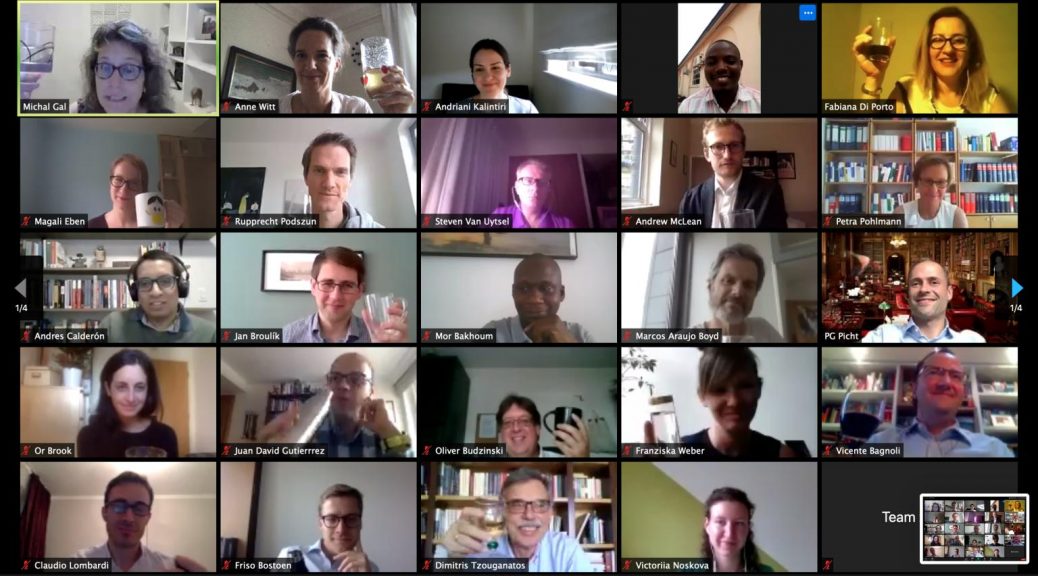
The Academic Society for Competition Law, ASCOLA, regularly brings together the academics who research and teach in the area of competition – even this year! Instead of going to lovely Porto, however, the community of antitrust aficionados met in a three-day-Zoom-conference. Rupprecht Podszun was one of the hosts. He is the Ascola Vice President, and defying all journalistic ethics, he interviews himself here and gives his personal conference debrief for the readers of D’Kart. Thankfully, less biased Friso Bostoen shares…

The Facebook decision of the German Federal Court of Justice this week is moving the competition law community – and not only them. After an initial statement by Rupprecht Podszun right after the decision was handed down, now Daniela Seeliger takes her turn. She clarifies what the Court has clarified – and what not. The Bundeskartellamt’s decision prohibiting Facebook from collecting and using data from its subsidiaries and third companies for its own business activities had caused a worldwide sensation….

The German Federal Supreme Court has ruled against Facebook and in favour of the Bundeskartellamt, the German competition authority, in preliminary proceedings on a leading competition/data case. This goes into the heart of Facebook’s business model. For the Bundeskartellamt, it is the most important case in the era of the data economy. The decision is, at the very least, a surprise. Rupprecht Podszun has first thoughts on it. You may read this post in German, too, by switching the language…