
Competition law in conflict cases 2025 – highlights beyond the classic follow-on cases
The year 2025 had a lot to offer in terms of private competition law enforcement in Germany, particularly in classic follow-on proceedings. At the end of the year, the Higher Regional Court (Oberlandesgericht, OLG) Stuttgart made quite an impression with its damages assessment in the so-called bathroom fittings cartel by introducing “corridors for estimation”. There was a mammoth hearing in Munich Riem on damages in the Trucks case, and the Federal Court of Justice (Bundesgerichtshof, BGH) heard a case on class action style debt collection. But there were also a number of exciting stand-alone conflicts with a focus on antitrust before the civil courts. Klara Dresselhaus recently highlighted a prominent example – the dispute between Tchibo and Aldi-Süd – here on D’Kart. In this post, Dr. Stephan Kreifels gives a subjectively curated, colourfultour through published cases beyond the much-discussed follow-on damages proceedings:
Dieser Beitrag ist hier auch auf Deutsch verfügbar!
1. A grand start: concert dates before the Munich Higher Regional Court
Let’s start with a musical drama in Munich that is fitting for the season (OLG Munich, 6 February 2025 – case 29 U 1716/23 Kart e): Since 1985, a concert organiser has been performing Bach’s Christmas Oratorio (4th Advent) and St Matthew Passion (Good Friday) with a choir on fixed dates. The organiser had already booked a large concert hall from the municipality for the 4th Sunday in Advent 2019. However, when the organiser’s choir switched to a competing event organiser, the municipality withdrew the option it had already promised for the 4th Sunday in Advent 2019. Instead, it offered a Tuesday. The organiser was not satisfied with this, sued for damages for the “Tuesday effect” and demanded “protection of tradition”. His argument: large concert halls in Munich are practically only available from the city’s subsidiary, and this was abusive.


The Cartel Senate (Kartellsenat) of the Munich Higher Regional Courttook a differentiated position: Yes, the city subsidiary did have a dominant market position in the greater Munich area for large classical concert halls during Advent and Holy Week. But no, there was no obligation to contract for traditional dates. The key point was the temporal market definition: for the Christmas Oratorio, the relevant period was “from Advent to Epiphany (6 January)“, and for the St Matthew Passion, Holy Week up to and including Good Friday. Within these time frames, there are economically equivalent alternatives – for example, the third instead of the fourth Sunday in Advent. A claim to specific days? No. Nevertheless, there was a solo for civil law: the withdrawal of the option already granted for the fourth Sunday in Advent 2019 was a breach of contract, according to the Higher Regional Court – damages yes, abuse of market power no.
2. From the concert hall to the “quarry”: Section 20 GWB under scrutiny of the Federal Court of Justice
An abrupt change of scene – and yet classic territory: when you hear “quarry” in German competition law circles, you may think of 2022 and the Federal Court of Justice’s decision on the unrestricted reviewability of arbitral awards with regard to Sections 19-21 of the German Act against Restraints of Competition (Gesetz gegen Wettbewerbsbeschränkungen, GWB) (BGH, 27 September 2022 – case KZB 75/21). The Federal Court of Justice decision of 28 March 2025 (case KZR 73/23) continues this feud, but in terms of content, it deals purely with Section 20(1) GWB, a provision on superior market power (dependency – a lower threshold than dominance). The setting: A forest owner and lessor of two neighbouring quarries did not want to include the previous lessee of one quarry in the reallocation of a lease agreement in order to eliminate the competitive relationship with her competitor – the lessee of the other quarry. The Federal Court of Justice rejected this approach. In its reasoning, the Federal Court of Justice first provides a textbook definition of dependency within the meaning of Section 20(1) GWB. In this specific case, the quarry tenant was so dependent due to location-specific investments and long lead times that the termination of the lease threatened its existence. The owner could therefore not simply ignore the existing tenant when re-letting the property or eliminate competition in favour of another bidder. The Federal Court of Justice made it clear that a higher lease interest due to less competition was not a legitimate goal. However, this did not mean general most-favoured-nation treatment: the existing tenant could not always demand identical conditions, as objectively justified differences remained permissible.
3. Higher Regional Court of Düsseldorf: no abstract review of association rules
Abuse of market power because access to state courts is blocked? A 45-year-old US para-cyclist sued the International Paralympic Committee (IPC), based in Bonn, to prohibit the application of certain association rules. His main accusation: incorrect classifications of competitors would distort competition. However, as an athlete, he was not allowed to protest against the classification of competitors like himself due to the association’s rules. The Regional Court (Landgericht, LG) Cologne initially agreed, but the Higher Regional Court of Düsseldorf put the brakes on.
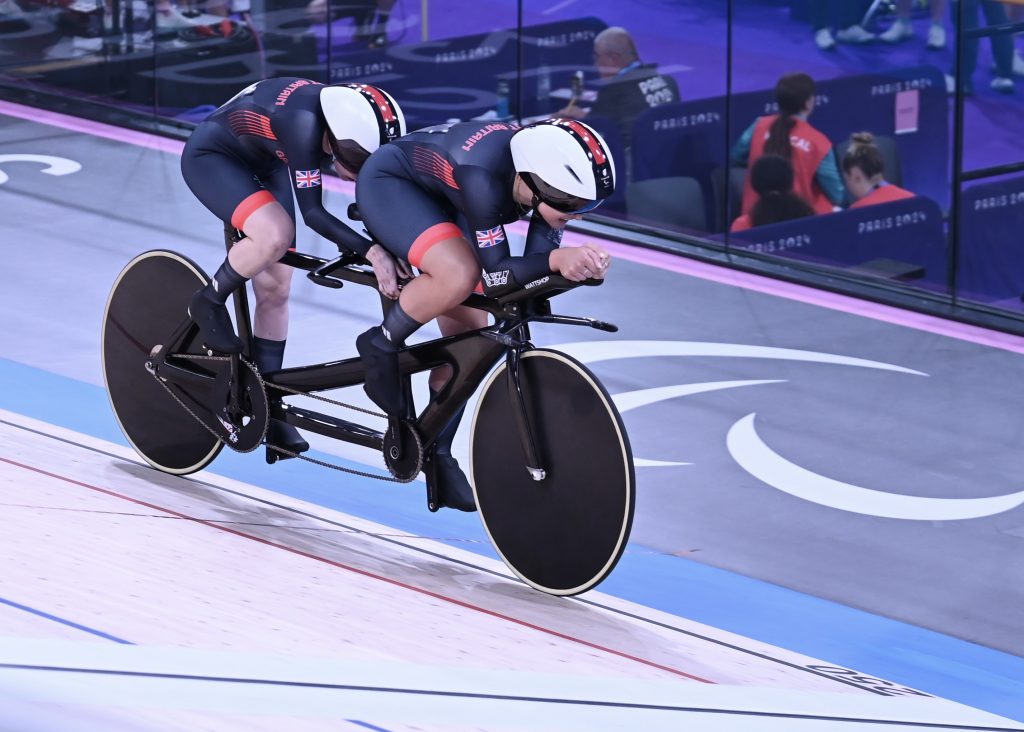

The message from Düsseldorf was that antitrust does not serve the abstract review of the terms of an association. In order to have standing as an “affected person” (Section 33(3) GWB), a real, concrete risk of damage must be substantiated. This was lacking in this case, as was proof that the plaintiff had even attempted to use internal legal remedies or that state courts were in fact excluded. Abuse of a dominant market position could only be considered if the statutes excluded access to state courts and arbitration proceedings did not guarantee effective legal protection in accordance with minimum standards under the rule of law. There were no indications of this; merely describing internal legal remedies as final (“abschließend”) was not sufficient for this purpose.
4. Digital and DMA: Civil court premieres and “mundane” questions of jurisdiction
There was no shortage of digital bombshells in 2025. First and foremost, the DMA celebrated its premiere in civil courts:
- In a highly publicised decision, the Regional Court of Mainz (12 August 2025 – case 12 HK O 32/24) ruled that Google’s Android setup process constituted an inadmissible tying arrangement under Article 5(8) DMA. The court objected to Google requiring users to register with Gmail in order to use services such as AndroidOS. Even the option introduced later to provide only a phone number was not permissible, as this automatically generated a Gmail address. The Regional Court of Mainz did not see the need to suspend proceedings under Section 39(2) and (3) DMA to avoid conflicting decisions with the European Commission.
- A few weeks earlier, the Higher Regional Court of Cologne had already dealt with the DMA (15 UKI 2/25): In summary proceedings (Eilverfahren), it found that Meta’s plan to use public content from Facebook and Instagram for AI training did not constitute a prohibited “combining” of data under Art. 5(2)(b) DMA. There was no targeted linking of a user’s personal data from one central platform service with the same user’s personal data from the other central platform service. The statements made by the Higher Regional Court of Cologne suggest that it would have liked to obtain an opinion from the European Commission on this complex issue pursuant to Art. 39(1) DMA or even refer it to the European Court of Justice (ECJ) for clarification; however, this route was unavailable to the court in the summary proceedings.
As in previous years, 2025 saw the now familiar cases of users fighting back against the blocking of their accounts. So, nothing new in that regard. However, 2025 showed that even in digital cases, the music sometimes plays in the supposedly “mundane” procedural law. The central question of the year in some of the proceedings concerning account suspensions was: Do German courts have jurisdiction, even though the terms and conditions of the user agreements provide for a place of jurisdiction outside Germany (usually Ireland)? Courts in Düsseldorf, Berlin and Nuremberg offered a response that was anything but “mundane” and examined the issue of jurisdiction in detail in light of ECJ case law (in particular Wikingerhof, Apple Sales and CDC). The decisions are worth reading; here is just a greatly abridged light version:
- The Higher Regional Court of Düsseldorf kicked things off with its decision of 2 April 2025 (case VI-U (Kart) 5/24): For injunctive relief against social media bans without prior or immediate subsequent justification and hearing, the tort jurisdiction pursuant to Art. 7 No. 2 Brussels I Regulation is generally applicable, provided that – as in this case – in contrast to the jurisdiction under Art. 7 No. 1 Brussels I Regulation, a legal claim is asserted that exists independently of a contractual relationship between the parties. The Higher Regional Court of Düsseldorf was unable to establish an effective agreement on jurisdiction with exclusive jurisdiction of Irish courts under Article 25(1) sentence 2 Brussels I Regulation.
- In its ruling of 28 July 2025 (case 61 O 99/25 Kart eV), the Regional Court of Berlin II agreed in summary proceedings: Article 7 No. 2 of the Brussels I Regulation applies. The jurisdiction clause provided for in the General Terms and Conditions does not apply due to a lack of effective inclusion.
- The Higher Regional Court of Nuremberg countered this in its decision of 19 August 2025 (3 W 1224/25 Kart): if a user demands reconnection due to alleged violations of the terms of use, this typically constitutes a contractual dispute, for which the jurisdiction for tortious acts under Article 7 No. 2 of the Brussels I Regulation does not apply. In the specific case, the plaintiff had failed to provide sufficient substantiation for the allegation of abuse of market power. In addition, Nuremberg – unlike Düsseldorf – considered the inclusion of the jurisdiction clause to be effective in the specific case.
5. More exotic topics: “Administrative assistance” in estimating damages and a look at fees

Rare in practice and controversial: Section 90(5) GWB allows courts to ask the Federal Cartel Office (the German Bundeskartellamt, FCO) for an opinion on the amount of damages – an instrument that has so far led a shadowy existence in practice. In the legal commentary “Münchener Kommentar”, Nothdurft and Breuer – both of whom work for the Office – pointedly describe it as useful as it is impossible, especially since the introduction of the regulation was not accompanied by any increase in the Office’s resources and the Office therefore uses its resources more to initiate and conduct new proceedings than to deepen the punitive effect of proceedings that have already been concluded. Nevertheless, on 20 August 2025 (case 8 O 34/22 Kart), the Regional Court of Dortmund requested “administrative assistance” – not with questions directly concerning the amount of damages. Instead, the chamber requested clarification of what was actually meant by plant protection products (“Pflanzenschutzmittel”) in the plant protection products cartel (“Pflanzenschutzmittelkartell”) – consistent with the penalty notices, case report and merger control – with a “response deadline” of the end of October 2025. A decision on this matter has not yet been published (and yes: follow-on proceedings should actually be excluded in this blog post anyway).
FFinally, a foray into administrative law: Before the Administrative Court (Verwaltungsgericht, VG) Berlin (15 May 2025 – case 1 K 356/21), the plaintiff, who is active in the field of outdoor advertising, was in dispute with the State of Berlin. In 2015, the plaintiff installed outdoor advertising spaces on private land that it did not own. Since, in the opinion of the State of Berlin, the advertising hoardings encroached on public road space, special use fees were payable. As a last resort, the plaintiff attempted to reduce the amount of this fee by invoking antitrust law. The accusation: abuse of market power by the State of Berlin. However, the court ruled that where the state levies fees, it acts in a sovereign capacity. Section 185(1) sentence 2 GWB excludes such charges from abuse supervision, so that neither Section 19 GWB nor Article 102 TFEU were applicable. There can be no question of an “exit into public law” – legality must be examined under administrative law and has not been challenged in this specific case.
6. Conclusion
The antitrust year 2025 once again proved to be remarkably diverse in terms of conflicts, beyond the major follow-on proceedings. Once again, the focus was on issues of abuse of market power across a wide range of sectors, from culture and raw materials to digital issues. Numerous proceedings have not yet been finally decided and will therefore continue to occupy us in 2026. The excitement continues.
And the above overview is only a snapshot, which could have been even more colourful and “niche” – think, for example, of decisions on antitrust objections in the streaming business (LG Munich I, 28 May 2025 – case 37 O 2226/25), on joint remuneration rules for journalists (OLG Celle, 6 March 2025 – case 13 U 25/24 (Kart)) or on the “classics” surrounding concession proceedings (e.g. LG Hannover, 19 February 2025 – case 76 O 13/24). Not to forget: published cases represent only a fraction of the actual conflict landscape. This makes it all the clearer that every published decision sharpens our focus and creates tangible added value – even in 2026.

Dr. Stephan Kreifels is a lawyer at Gleiss Lutz in the Antitrust and Dispute Resolution practice groups. Between 2016 and 2018, he was a research assistant and doctoral candidate at the Chair of Civil Law, German and European Competition Law at Heinrich Heine University Düsseldorf.
Feel free to recommend the D’Kart blog to your colleagues! If you don’t want to miss any posts on our D’Kart blog, subscribe to our newsletter here. And if you do not know it already, check out our „Disszember“ here. Photo at the top by Long Ma (Unsplash).