Conference Debriefing (47): 60 years of the German Competition Lawyers Association
This year’s annual meeting of the Cartel Law Study Group in Bonn was special for three reasons: First, this association of lawyers celebrated its 60th anniversary. Second, the conference has been held at a time when competition and antitrust law are perhaps under pressure as never before. And third, the brilliant and sharp Prof. Dr. Thomas Lübbig was on-site to report for antitrust law blog D’Kart, accompanied by his valued colleague Geronimo Benedict. Here is their report from Bonn!
Dieser Beitrag ist hier auch auf Deutsch verfügbar!
1. The new fifty
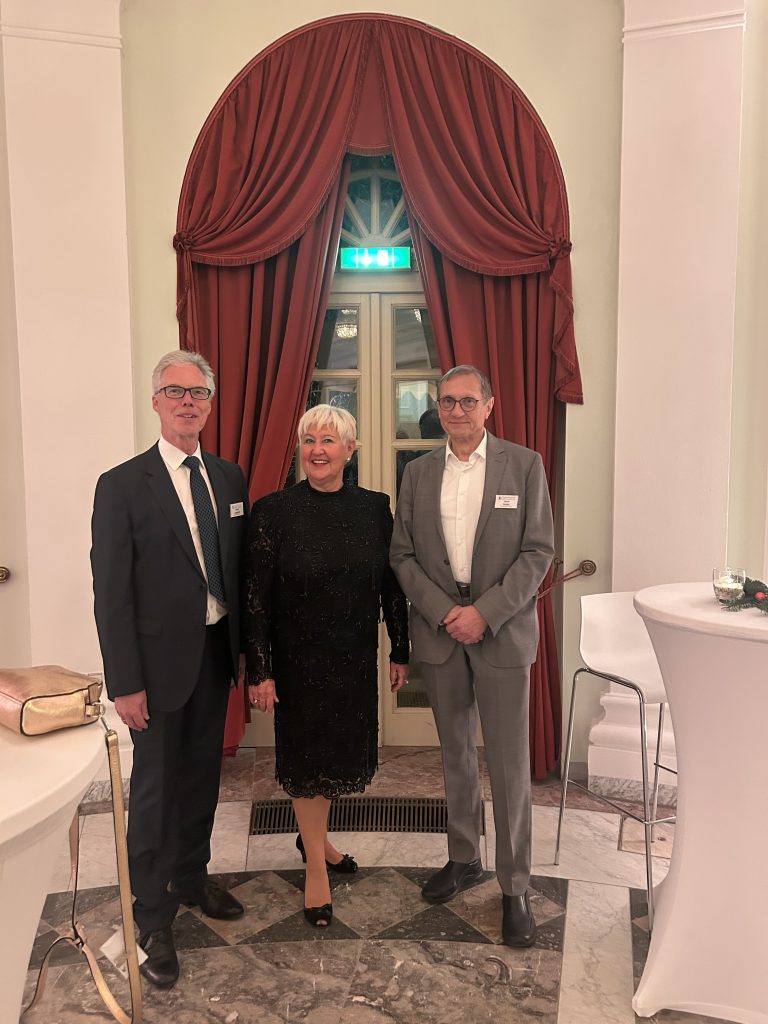
On December 3 and 4, 2025, the board and members of the Studienvereinigung Kartellrecht (German Competition Lawyers Association) met with the heads of the Federal Cartel Office (the German competition regulator Bundeskartellamt, FCO) and academia, first in Bad Godesberg and then the next day in Ramersdorf on the other side of the Rhine, to celebrate the magical number sixty. No, sixty is not the average age of the members of the board, at least not exactly. Rather, the association was founded by fourteen lawyers in Düsseldorf on March 15, 1965, according to the “About us” section on the association’s website. And it is growing almost daily to over 1,600 members, a development that has been accompanied by the associative accession of many competition economists. Strong growth in the antitrust consulting sector, stagnation in the general economy—an overall worrying development, but one that did not dampen the relaxed mood before the holidays.
Albrecht Bach had many anecdotes to tell about the beginnings and expansion of the association. This type of cultivated and entertaining lecture, which is all too rarely heard these days, could be described as witty. The commitment to open and often controversial dialogue between academia and practice has always been beneficial, striking a happy medium between academic conferences and commercial seminars. The classic lecture, which “gets to the bottom of things”, has certainly held its own against all kinds of modern formats. It’s all about finding the right mix. Even though the use of slide decks was not frowned upon anymore in recent times, it still has not become widespread. This was also evident during the workshop the following day, where slides were used sparingly and no one gave a presentation with their back to the audience.
Ingo Brinker reported in an elegant style on the many successes of this year’s activities of the newly elected board he chairs: growth not only in terms of numbers, but also in terms of various contacts with sister organizations in other European countries. A large number of high-profile events – especially in the regional forums. Formidable public statements on important competition policy projects that would certainly also attract attention in Brussels. After sixty years of such intensive and successful work, it was only appropriate to celebrate properly this evening. However, the event on the following day, December 4, was a working conference, not a symposium, not a Tusculum, not a workshop. We owe it to Max Weber that nothing can be done without “work.”
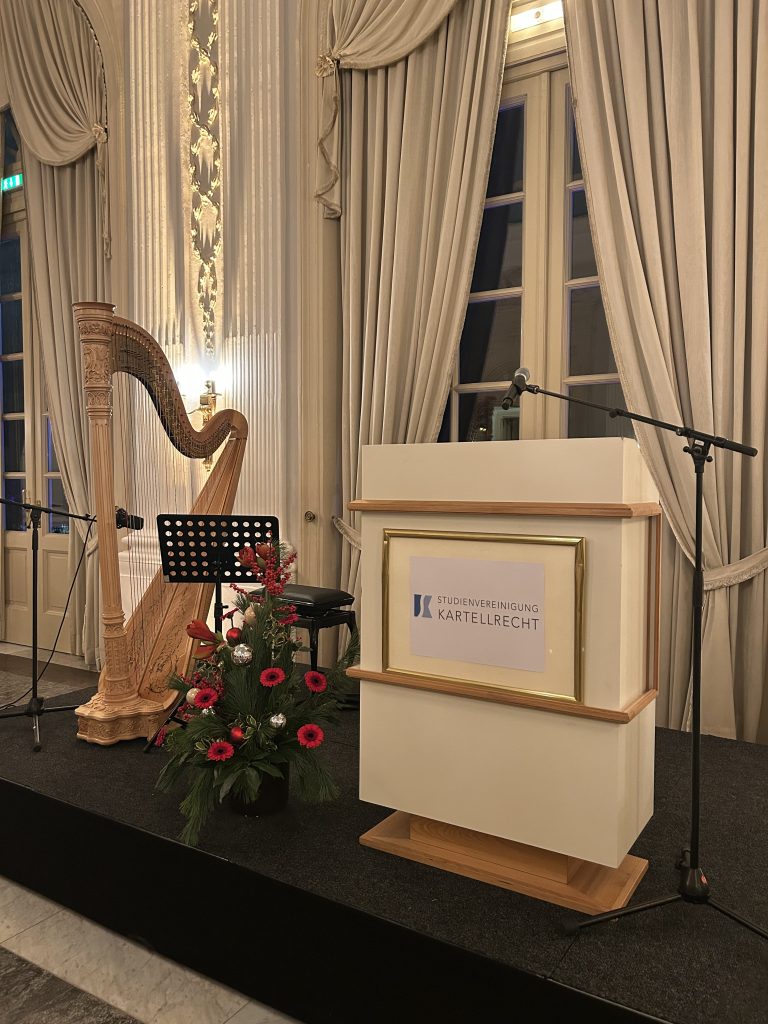
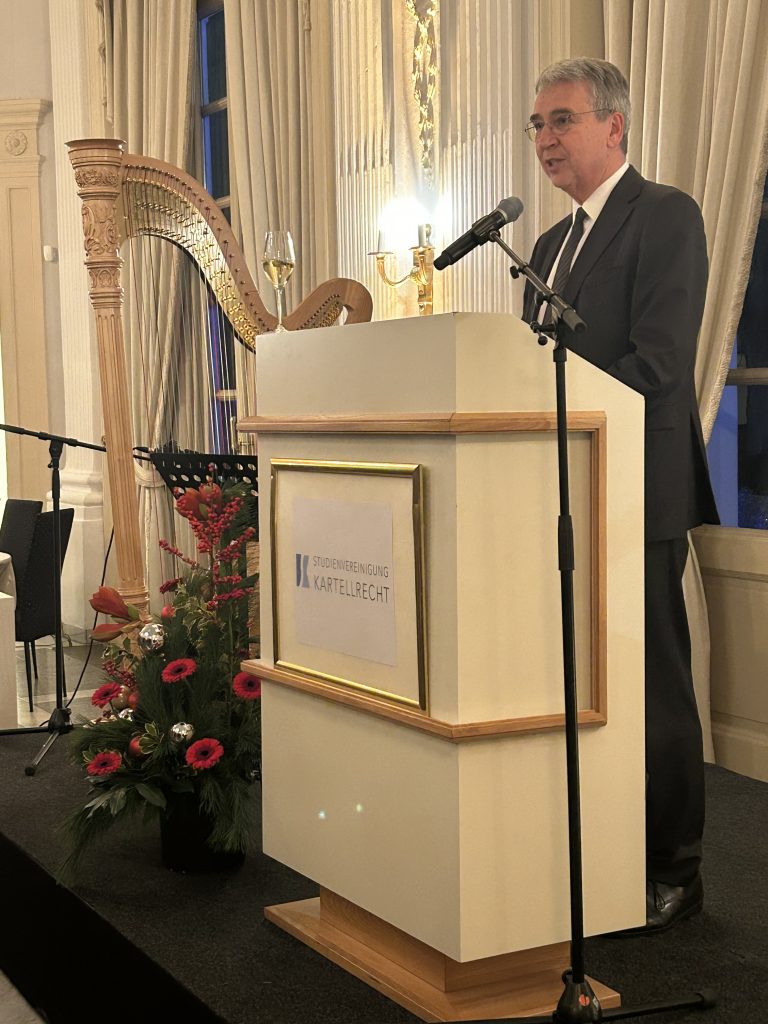
Already on this evening, President Andreas Mundt also addressed the attentive audience with an encouraging welcome speech. The speakers stood at the lectern right next to a harp, a particularly graceful musical instrument with great symbolic power. Brinker leaves nothing to chance.
2. Une soirée redoutable
The Rhineland’s charming penchant for diminutives has given us the Kom(m)ödchen, a cabaret stage known far and wide, located in a place where, according to popular On-Dit, the greatest concentration of prominent antitrust expertise north of Bonn can be found. In Bonn, on the other hand, the local vernacular created the Redüttchen.
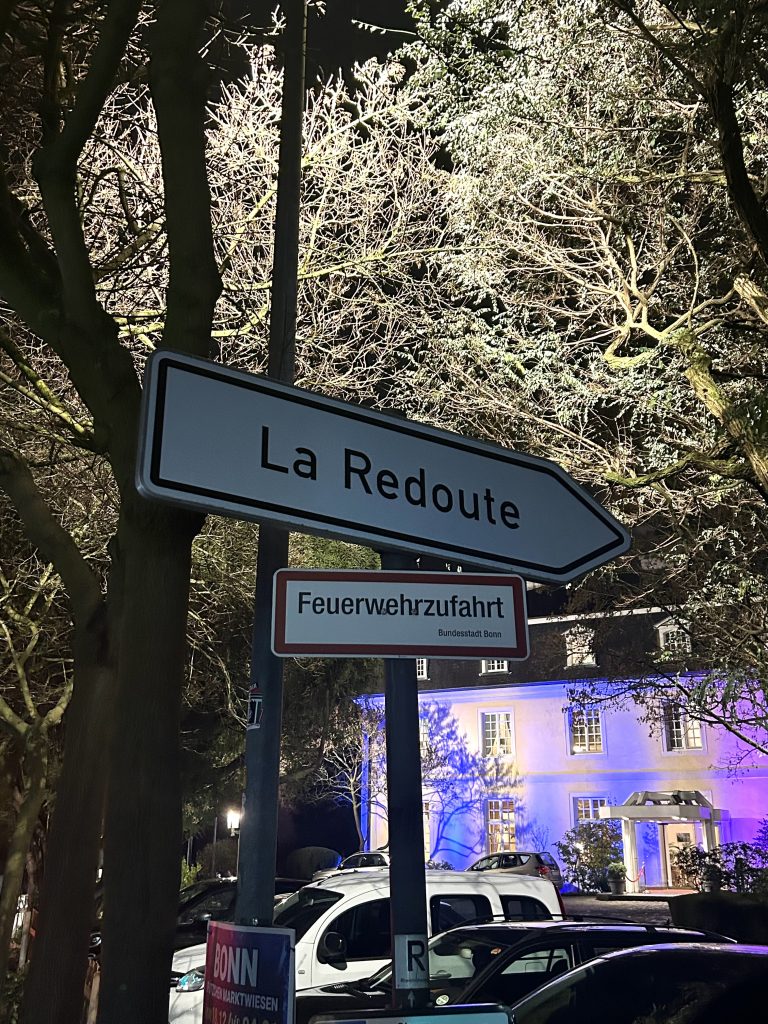
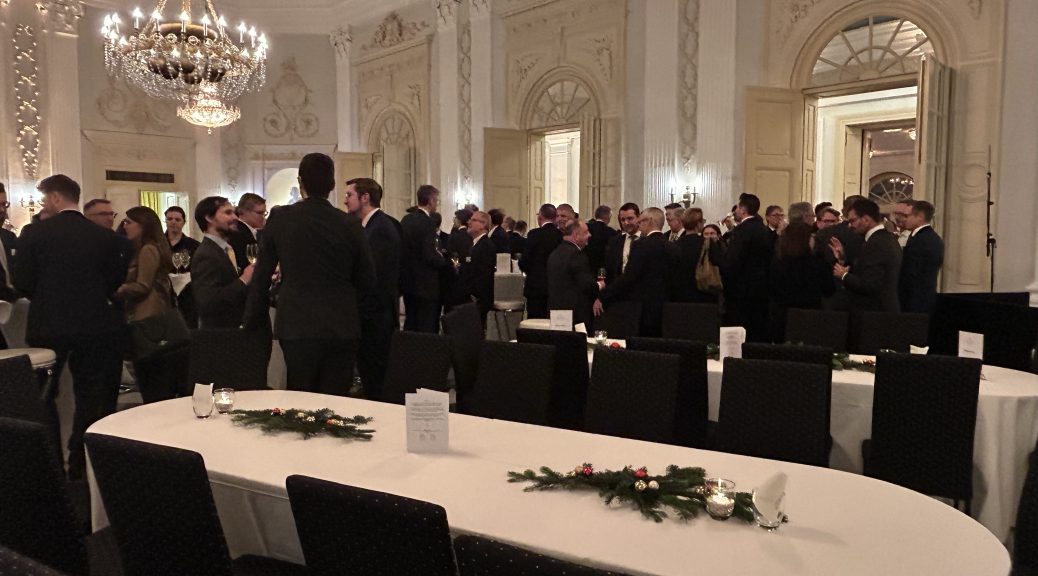
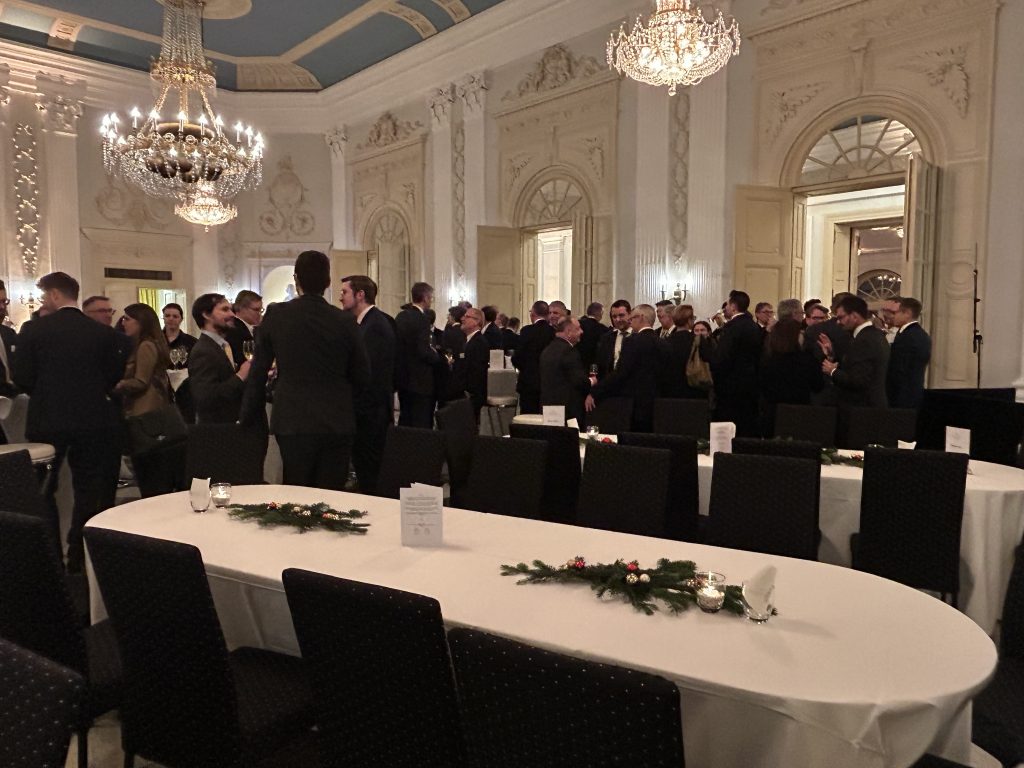
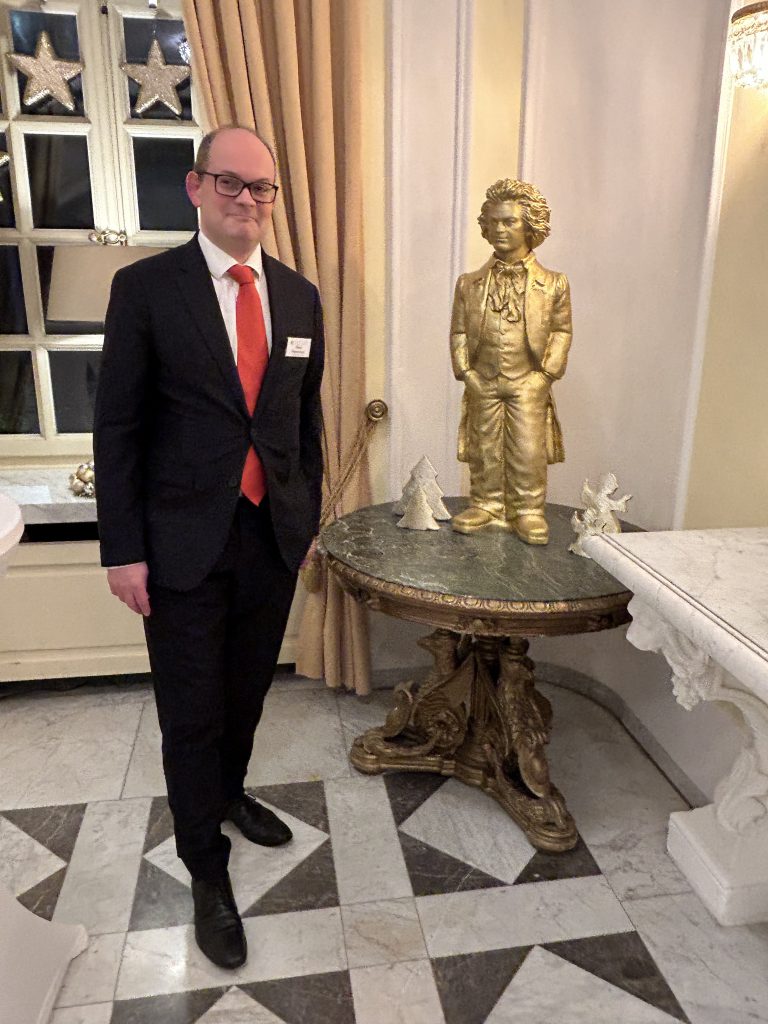
Not far from Godesburg Castle, the association gathered for its ceremony in the “parlor” of the Republic, in the Redoute (the Redüttchen is the smaller annex and former gardener’s house). The Redoute is a legendary palace where Beethoven and Haydn once met. Countless state guests have been received here with Republican splendor. Long-time Bonn residents vividly remembered lively piano competitions from their youth master classes. The following intercultural observation has been handed down from the eventful history of the house, which was also used as an officers’ club for various victorious powers in the post-war period: “The British period was marked by poverty and a strange sad tranquility; the Belgian by a superfluity of food and drink and an ever increasing vivacity; the French by the more selective, unobtrusive delicacy that had now become possible.” (Report by a British officer, quoted on the website of the International Club La Redoute).
The participants in the festive event seemed to be captivated by the genius loci: had State Secretary Alfred Müller-Armack and the later Federal Minister Hermann Höcherl perhaps discussed the concept of freedom in the modern competitive constitution here, where we were now sipping non-alcoholic sparkling wine, exchanging experiences from Scottish boarding schools, and speculating about Olivier Guersent’s successor? Even without nostalgia, the beautiful atmosphere in the former electoral ballroom prompted at least the older generation to question whether the German Bundestag‘s (the Federal Parliament) decision to relocate the federal government was a mistake.
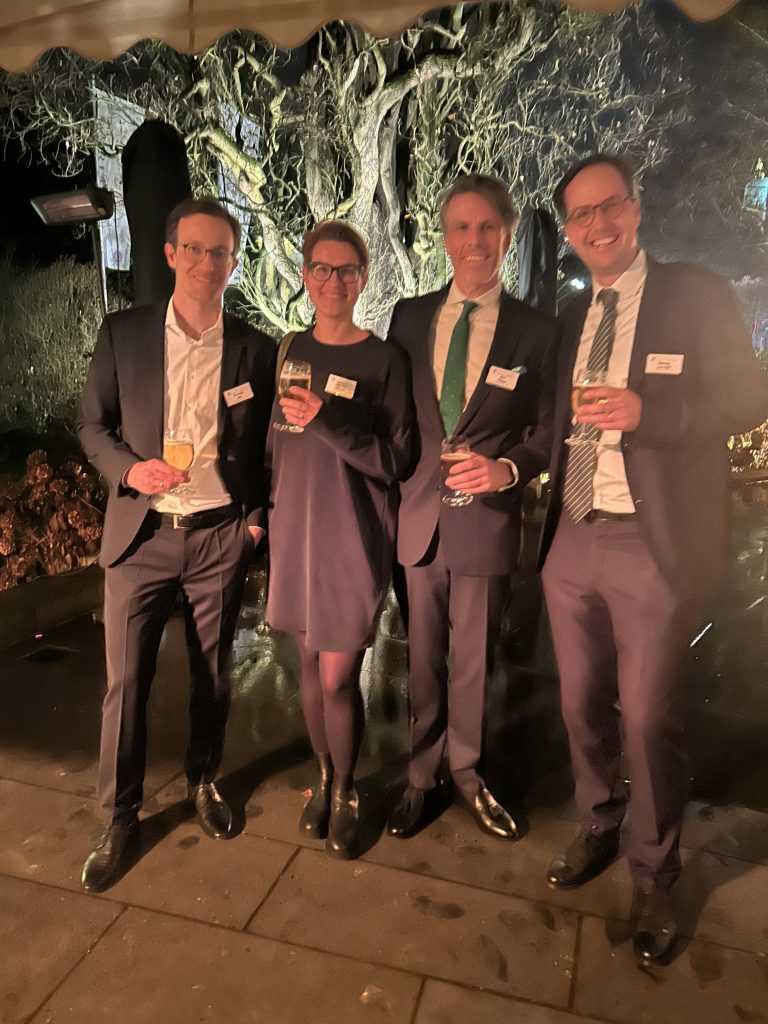
As on the following day on the other shore of the Rhine, the members of the association overwhelmingly followed a conventional dress code, regardless of none having been officially communicated. There was a lot of charcoal, and some Prussian blue; among the men, the trend back to ties, already observed last year, became more pronounced. White sneakers, often combined with dark clothing, recently a must-have for those who wanted to show fashion consciousness, youthfulness, or subtle opposition to the old dress codes of the city, were hardly to be seen the following day in Ramersdorf.
3. More than just housekeeping
In terms of association law, everything ran like clockwork. Albrecht Bach’s many years of beneficial work still shape the legal actions of the new board today.
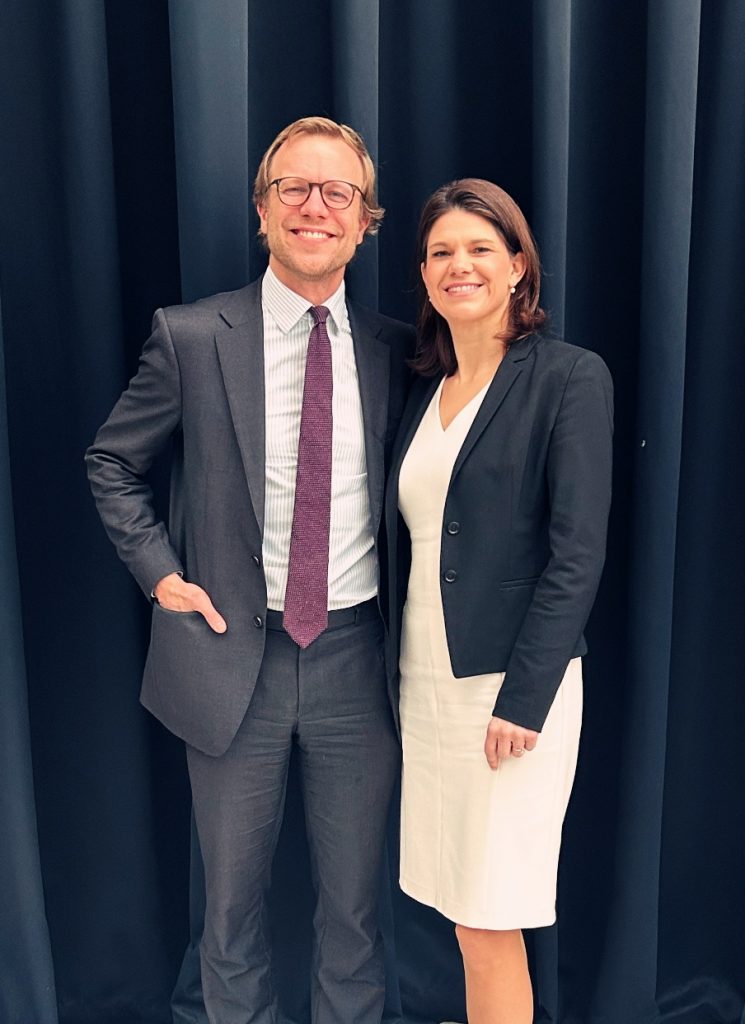
The association unanimously elected as many as three new honorary members: Astrid Ablasser-Neuhuber (Vienna), Hanno Wollmann (Vienna), and Albrecht Bach (Stuttgart), who has already been mentioned several times. The Austrian regional group thus emerged from the meeting stronger than ever. To balance things out, board member Richard Stäuber from Zurich delighted the audience with an extremely lively report from the Swiss Confederation. The long and controversial reform of the country’s antitrust law preoccupied the NZZ (a leading Swiss newspaper) even more than the impending imports of chlorinated chicken from the US during the relevant reporting period, a topic that had also kept the German public in suspense in a different context a few years ago. On December 4 at 5:00 p.m., i.e., on the same day, this traditional leading media outlet reported on the political dénouement of the long debate, which had been reached in Bern in dialogue between the National Council and the Council of States.
The announcement of the new regional heads received particular attention, not only in the respective provinces in Germany, but also in Brussels and London. A competitive and careful process continues to guarantee the association’s regional forums an exciting program led by proven and opinionated experts who are both “young” and “have been around for a while”. One round of applause followed another.
| Berlin | Dr. Jonas Brueckner Dr. Maren Tamke |
| Brüssel | Dr. Björn Herbers Dr. Bastian Müller |
| Frankfurt | Dr. Nils Bremer Dr. Andrea Pomana |
| Hamburg | Dr. Andrea Preuße Dr. Philipp Steinhaeuser |
| London | Marielena Doeding Juliane Guderian |
| München | Dr. Ilka Oberländer Dr. Pascal Pitz-Klauser |
| Rheinland | Lilie Barski Kaan Gürer Kevin M. Wilcock |
| Stuttgart | Dr. Jochen Bernhard Dr. Laura Roßmann |
4. Antitrust is not to blame
Brussels remained both close and distant during the working conference in Bonn. Unsurprisingly, the central focus was on the challenges of European competition policy, which were also clearly identified as such. Nevertheless, the discussion was about, but without, the participation of the European Commission’s Directorate-General for Competition (DG Comp). One member of the Association’s Board explained the composition of his panel with a touch of irony, noting that they had decided to forgo inviting a representative of the Commission in order to promote an undisturbed discussion.
Over the years, the association has become somewhat more “normal”, i.e., more European. The days when the rules of national antitrust law were sometimes considered to have a qualitative advantage over EU law are probably a thing of the past. The claim that dogmatics is an independent and superior source of insight, enabling dogmatists to gain deeper understanding of law, is also heard much less frequently at the association than it was in the past. This eliminates the need for a frequently artificial level of discussion, which was sometimes met with incomprehension in Brussels and was primarily perceived by Anglo-Saxon legal practice as a German quirk.
Clean, Just, and Competitive Transition
DG Comp has reorganized itself, and political communication seems to focus on issues for which the European Union is, at most, jointly responsible under Article 173 TFEU (competitiveness). As during the Commission’s previous mandate, DG GROW (Commissioner Séjourné) is also very present here, which was recently the case again with regard to the Union’s sourcing of raw materials. Many eyes are on whether the Commission’s political leadership will appoint a figure to succeed the Director-General for Competition with communication skills and management experience, as strong as in individual member states, not only in Germany. In addition, the question as to whether the discussion about antitrust law as a side dish is a thing of the past was posed by Freiburg purists. The future contribution of European competition policy to strengthening social housing management is also part of this discussion.
As far as we are concerned
In the presentations and discussions, a few popular phrases came up again: times are not getting any easier, and may even be getting more difficult. A consensus observation. A few “beautiful cases” have been decided under Section 19a of the German Act Against Restraints of Competition (the German competition law Gesetz gegen Wettbewerbsbeschränkungen GWB), so there is also a level of competition policy aesthetics that must be taken into account when evaluating the actions of the authorities. Antitrust damages are “one of those things”. Friendly agreement spread through the room here as well. On many issues, we are “on the right track”. Finally, the discussion touched on the issue of conflict defense (including in administrative proceedings), which is sometimes conducted overly ad personam. One colleague, expressed his “gentle but insistent” disagreement on this point. It was good that this difference of opinion was addressed openly – as was the complaint about excessively long briefs. There are many topics for the constructive internal discussion forums of the Competition Family.
The old economy, more relevant than ever
Even though the digital dimension of antitrust, which is evident everywhere, continues to play a major role, the core concerns of the analog economy remain as relevant as ever. Examples include district heating, parts management, waste management, and fuel wholesale. The latter two sectors are the focus of the two new proceedings under Section 32f GWB. The market design from Bonn, which was invoked by critics (including the author) during the legislative discussion of this NCT provision, has not yet materialized. Andreas Mundt rightly pointed out that politicians are increasingly fond of the instrument of sector inquiries, but at the same time disappointed that the improvement in the market situation is not happening fast enough. There is a conflict of objectives here that deserves further consideration.
All eyes on the President
As every year, the president’s (of the FCO) speech was the rhetorical prelude and highlight of the event. Andreas Mundt was en pleine forme. It was a welcome opportunity to reflect once again on many of the analyses he had recently presented at the BDI’s (the Association of the German Industry Bundesverband der Deutschen Industrie) Legal Forum and in the Handelsblatt newspaper with the expert audience gathered in Bonn.
There are many reasons for the general malaise in the German and European economies: a lack of bureaucracy reduction (quite the opposite, in fact, despite the many omnibus laws from Brussels), corporate taxation, shortcomings in education policy, the laborious transfer of technology in Europe, the lack of a capital markets union, and many other deficits that Mario Draghi clearly identified. The lack of enthusiasm on the part of antitrust authorities to make concessions in favour of creating European champions is hardly a significant cause of Europe’s weak growth. Resilience may be a new political aspect that could be considered in merger control in selected cases. Innovation defense will be kept in mind, according to the widespread opinion of other competition authorities in Europe. Let’s see what the Commission’s Merger Guidelines will say about this in the future. Investment commitments (keyword: MIBA-Zollern), a broad field, difficult to implement successfully, the commitments would then also have to be “brought forward”. In the subsequent discussion, the idea of investment commitments backed by high penalties, based on the American model, gained initial traction. However, there was little sympathy for this idea in the room. Efficiency gains as a defense: Yes, difficult in individual cases and in forecasts, but not impossible, see the case report on the merger control proceedings EP Group/Kraftwerk Lippendorf, Ref. B 8 – 83/25 of October 8, 2025. Now after all, possibly call-in: Yes, perhaps, and if so, then preferably with criteria that do not depend on substantive qualitative assessments.
It is therefore not antitrust law that is to blame if Europe lags significantly behind the Lisbon Strategy of March 2000, which was supposed to make Europe “the most competitive and dynamic knowledge-based economy in the world” by 2010. The approach currently being pursued in England (antitrust law primarily as an instrument of growth), which the author recently warmed to, is not recommended for immediate imitation in Germany. The European Union once again has an important task ahead of it. According to Andreas Mundt, the FCO will continue to contribute its very modest share (in linguistic terms, probably a stylistic device of understatement) with the same commitment as before. In other words: a well-run organization all round.
Panels One, Two, and Three
The first two panels, composed of a diverse group of participants based on their affiliation with law firms and employers, focused on two ongoing consultations by DG Comp on the reform of the Merger Guidelines and Regulation 1/2003. The Directorate-General is currently conducting several other consultations, seeking to find out what the world thinks about its administrative actions in many areas. Carsten Grave spoke in connection with the legal nature of the guidelines of government by guidelines, a constitutional issue that should not go unmentioned. In the run-up to this, a government by consultation is already taking place, a variant of the exercise of soft power that has not yet been sufficiently researched in constitutional law.
The first panel, consisting of Carsten Grave, Johannes C. Lüer, Alexander Rinne, and Ulrich Barth from the FCO as commentator, discussed many of the questions that Andreas Mundt had already presented, with Thorsten Mäger and Martin Klusmann as moderators. How predictable must innovation effects be, both good and bad? The bon mot about forecasts being particularly difficult when they concern the future hung invisibly in the air.
The second panel, consisting of Kaan Gürer, Christian Horstkotte, and Gunnar Kallfaß from the FCO as commentator, as well as Marc Besen and Christian Steinle as moderators, dealt with the major pain points of the proceedings, including hold orders, remote digital searches, access to files (a perennial issue), and confidentiality rings. Finally, it also dealt with preliminary injunctions. One had the impression that the association’s working group was more enthusiastic about this increased form of intervention management than the agencies themselves. This was also an exciting overview of the state of affairs and disputes.
The third panel on issues relating to the prohibition of price maintenance in horizontal relationships and in atypical three-person constellations was certainly a welcome blast from the past for some guests. While many members of the association, influenced by Brussels modernism, have become accustomed to assessing the most important issues primarily as functions of enforcement priorities and the latest theories of harm, Anne C. Wegner and Markus Brösamle, moderated by Kathrin Westermann, actually focused on classic instruments of local jurisprudence. What is relevant is not only what is written in the second sentence of a particular recital, which may have been unfortunately translated from a foreign language, and how it was formulated in the previous version of the document, but also what “the legal literature” has to say about it! A presentation duet of the kind that used to be the norm at the association according to Albrecht Bach’s speech. Despite the late hour, the audience asked many interested questions, which further broadened the already subtle discussion on individual case groups of vertical antitrust law.
5. The culture of debate, not quite as it used to be
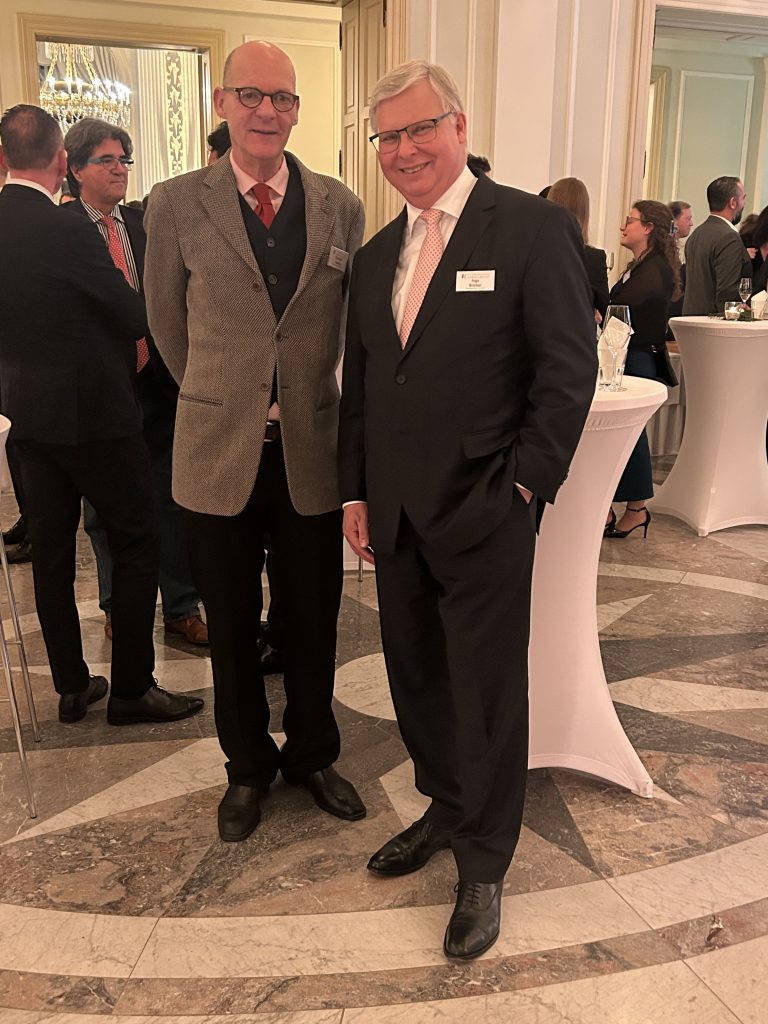
Brinker and Mundt were the only speakers who were spared the panel format which is so popular today. At least the hosts did not arrange the speakers of the individual panels in a semicircle on armchairs, as is often the case in today’s television broadcasts. This meant that the presentations retained a little of the old-style directness. A good compromise of the Zeitgeist. The tone is friendlier than in the old days at the association’s working conferences. Back then, the motto fortiter in re et fortiter in modo was still practiced or tolerated: “Dear colleague, your indefensible theses, unfortunately in plural, cause me, no, compel me to disagree emphatically”. Today, the paraliptic opening to a conversation prevails: “Hi Waltraud/Klaus-Dieter, really nice presentation, really well done, I don’t want to accuse you of logical inconsistency, but merely have a question: …”. [In both cases, not a literal quote.]
What was once again noticeable at the conference was that, despite the considerable presence of competition economic expertise in the room, the no longer fresh as the morning dew more economic approach hardly played a role. The question of which type 1 or type 2 errors could be avoided by this or that solution to an antitrust issue did not come to the fore. Not everyone will have regretted this.
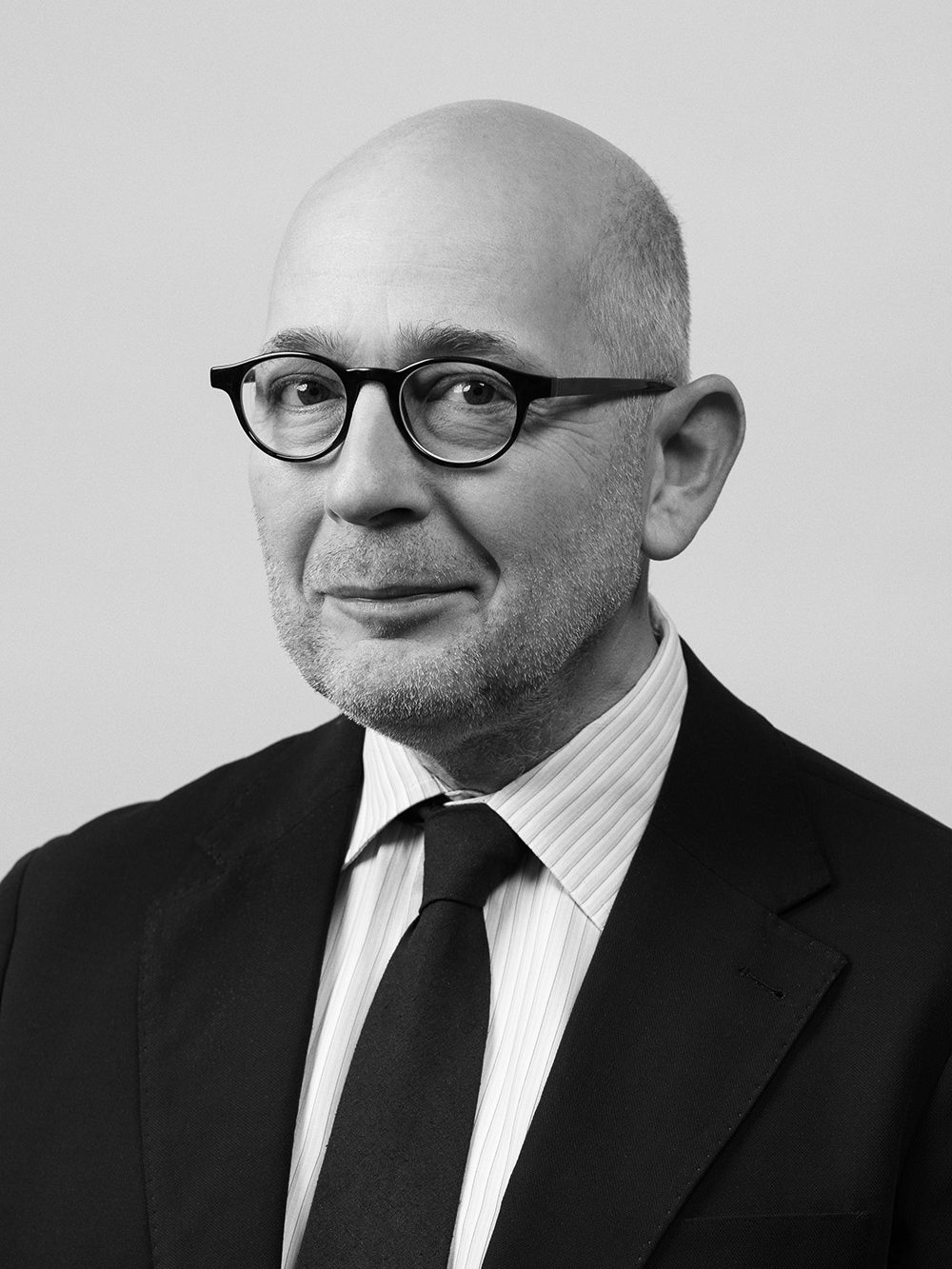
Prof. Dr. Thomas Lübbig is a lawyer and Of Counsel at Freshfields.
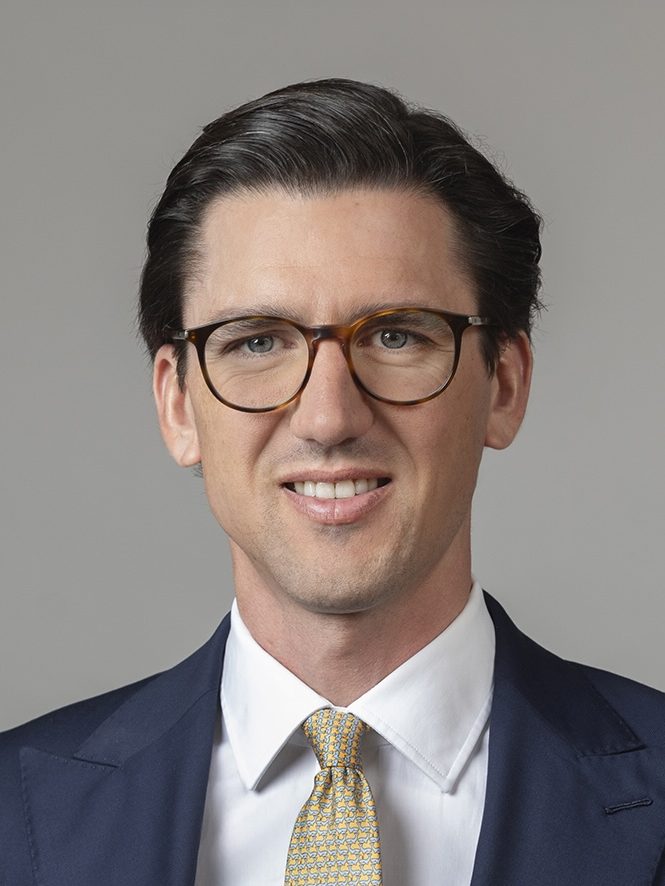
Geronimo Benedict is a lawyer and Principal Associate at Freshfields
The translation of this post was supported by DeepL.
Special reading tips of the week:
- Klara Dresselhaus on the Tchibo v. ALDI Süd case hearing at the Higher Regional Court of Düsseldorf. Here is the link.
- “Disszember” – our D’Kart Advent calendar 2025 with a daily antitrust surprise until Christmas! Here is the link.
Feel free to recommend the D’Kart blog to your colleagues! If you don’t want to miss any posts on our D’Kart blog, subscribe to our newsletter here.
One thought on “Conference Debriefing (47): 60 years of the German Competition Lawyers Association”
Lieber Herr Professor Lübbig,
man sehe es mir bitte nach, dass ich aus Zeitgründen erst heute dazu komme, Ihren gelungenen Bericht über 60 Jahre Studienvereinigung Kartellrecht zu würdigen: rund, umfassend, intelligent und unterhaltsam, so wie man es von Ihnen gewohnt ist. Herzlichen Dank!