Conference Debriefing (48): EU Competition Conference 2026
Those travelling to Brussels on 20 January 2026 did not dream of Belgian confectionery, but competition. It was time once again for the EU Competition Conference, jointly organised by the Institute for Competition Law at Heinrich Heine University and the law firm CMS. High-ranking representatives from practice, authorities and academia all turned out for the conference. Right in the thick of it: our doctoral students from Düsseldorf – Klara Dresselhaus, Sofia Schulz and Sebastian Steinert report for D’Kart.
A Day Dedicated to Competition
Małgorzata Urbańska (CMS) and Christian Kersting (HHU) welcomed the high-ranking representatives from authorities, law firms and companies, as well as the rest (“There are also students present!”). Kai Neuhaus (CMS) navigated through the packed programme, which included insights into enforcement priorities in digital markets, compliance tactics for minority shareholdings, and the latest learnings from the CJEU. And, of course, informative networking was also on the agenda – but not too informative, given the presence of competitors!
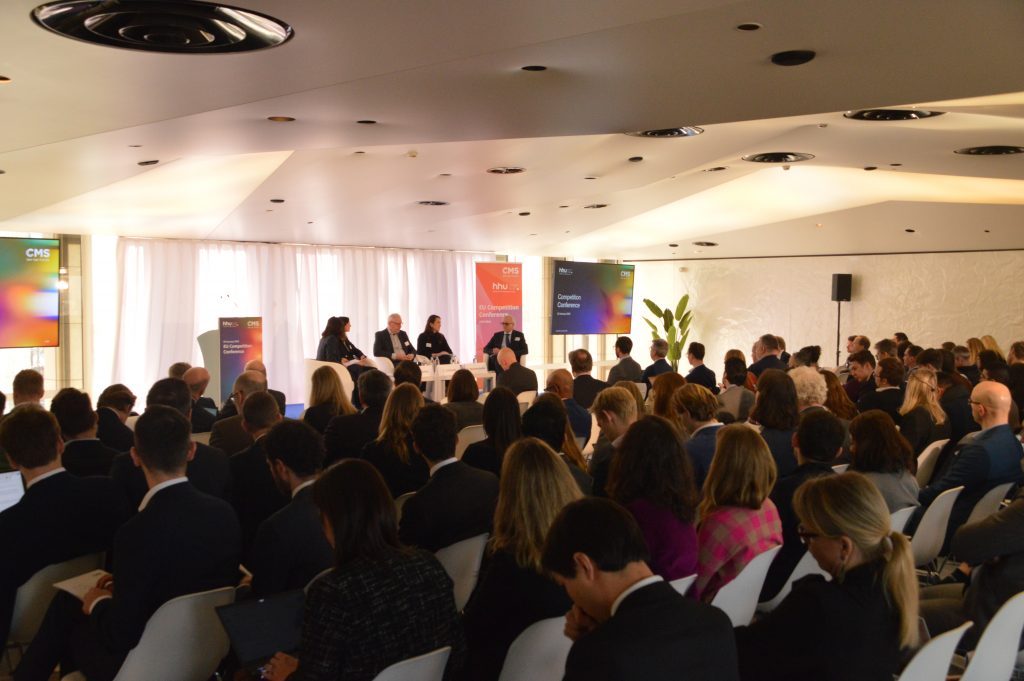
Merger Control: Efficiencies, Investment Commitments and Killer Acquisitions
The panel on merger control kicked things off. The discussion got straight to the point: Damien Gérard (Belgian Competition Authority), Raphael De Coninck (Charles River Associates) and Grania Holzwarth (Deutsche Telekom) engaged in a lively debate on the revision of the Merger Guidelines, moderated by Dieter Zandler (CMS Vienna) and Hendrik Nordling (CMS Oslo).
A recurring theme: efficiencies. Raphael De Coninck and Grania Holzwarth, in particular, repeatedly emphasised that the approval of a merger on the basis of efficiency considerations is purely theoretical. “I don’t see any merger that has been cleared on the basis of efficiency,” said Grania Holzwarth. The asymmetry of the evidence requirements was also criticised: while proving efficiencies is excessively strict and practically impossible in practice, competitive damage is often assumed on a prognostic basis.
Damien Gérard, Prosecutor General of the Belgian Competition Authority, countered that efficiencies were part of the everyday remit of competition authorities. Anyone claiming groundbreaking efficiency gains must also make the effort to substantiate them with comprehensive evidence. He also emphasised the limitations of the consumer welfare approach: “Efficiencies will never trump the entire elimination of competition.” The protection of the competition process in the EU is “constitutional”.
With regard to the guidelines, one buzzword dominated the discussion: innovation. The guidelines should not merely preserve past market structures, but should take greater account of future developments. On the subject of remedies, the importance of investment commitments was particularly emphasised. Damien Gérard, in particular, was critical in this regard. He argued that it was difficult to ensure their effectiveness and that companies lacked the incentive to comply with the law. Furthermore, damage to competition caused by the merger would be difficult to rectify.
The topic of killer acquisitions primarily addressed the problem of legal uncertainty. Although the problem was recognised as such, there was general criticism of decisions such as in the Towercast case: thresholds existed for a reason. From the point of view of authorities, intervention was seen as less problematic, and the Merger Guidelines should be approached with caution: “If it ain’t broke, don’t fix it.”
Information exchange without delivery fee
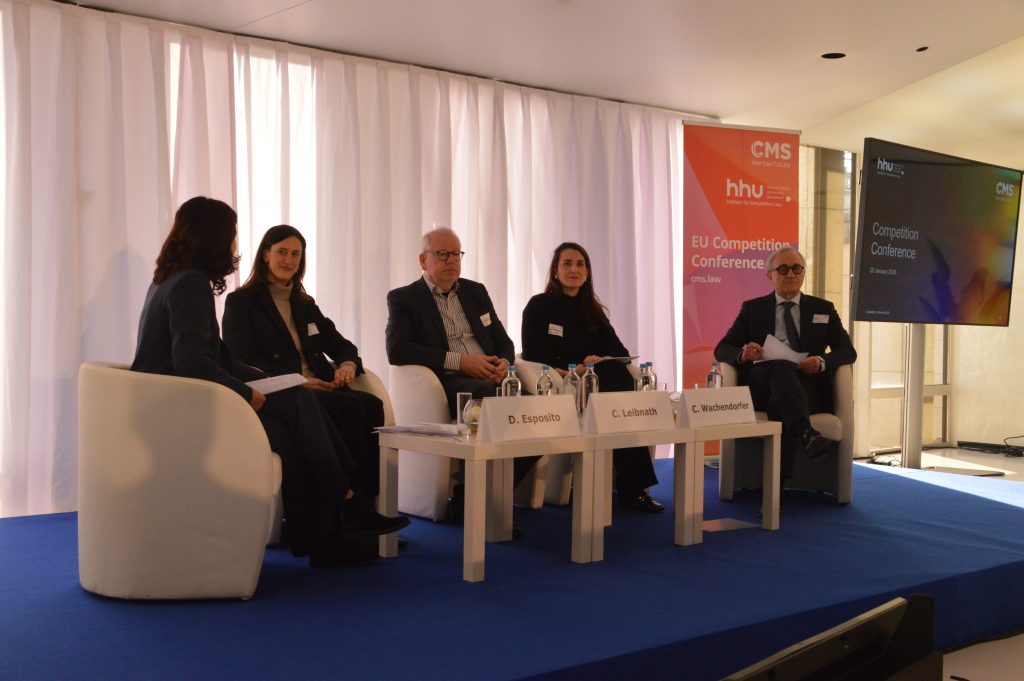
Next, the conference turned its attention to a classic antitrust issue: the exchange of information between competitors. The elephant in the room here was, of course, last year’s decision against Delivery Hero: the EU Commission imposed a fine of over €220 million on the delivery service, which gained access to sensitive business information through its minority stake in its competitor Glovo. Does Article 101 TFEU now structurally preclude minority shareholdings in competitors? And do private equity funds, which hold massive stakes in various competitors, now have to rethink their investments, asked CMS partner Michael Bauer.
“You’re being dramatic,” reassured Daniela Esposito (AkzoNobel), and Nestlé in-house counsel Christoph Leibenath explained that the case did not bring any material innovations except for the reminder that the prohibition of anti-competitive agreements also applies in the context of minority shareholdings.
And what does Delivery Hero have to say about this? At some point, Michael Bauer released Delivery Hero’s in-house counsel Carla Wachendorfer from her duty of confidentiality. The innocent phrase “Carla, let us know if you have something to say” naturally rubbed salt in the wound. In any case, Wachendorfer promised the utmost caution for future minority investments, including internal “firewalls” and “clean teams.” And for particularly confidential data, even smaller recipient groups could be set up, so-called “super super clean teams,” advised Esposito from AkzoNobel.
Competition between Cloud and Crisis
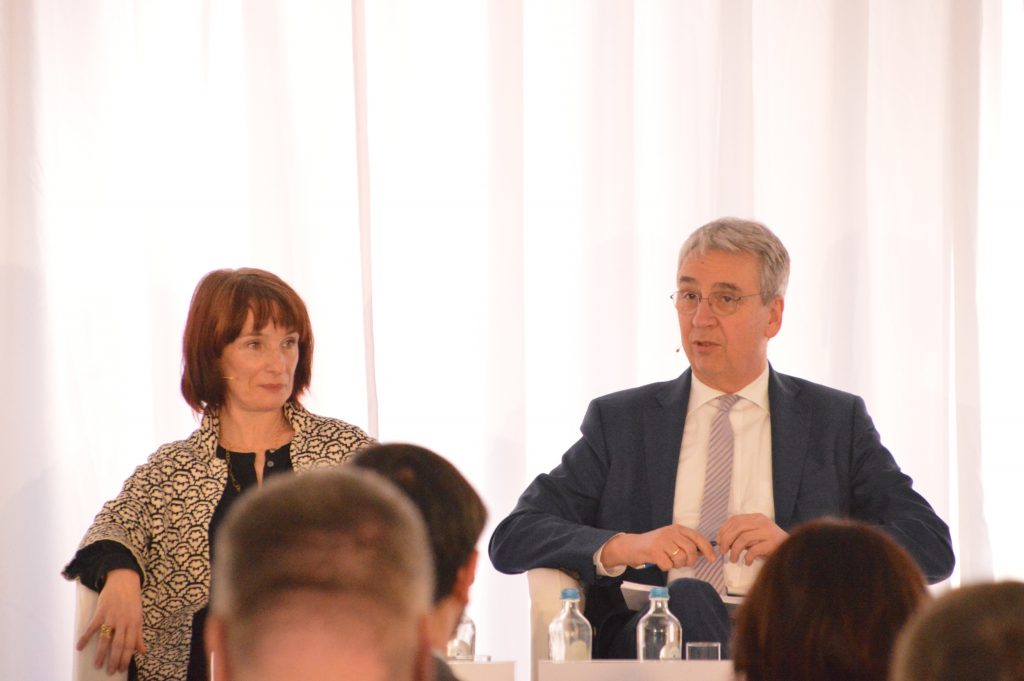
“In today’s world, continuity and stability are an advantage,” said Linsey McCallum, summarising the first year of DG Comp under Teresa Ribera as the new EU Commissioner, which is why the course set by the previous Commission is being continued in many respects. The DG is not shying away from the big digital issues (e.g. with the Google Ad Tech decision), is setting its own priorities in the area of sustainability (e.g. with guidelines for recycling cooperations) and is taking competition law into the future with new reforms (e.g. Regulation 1/2003, Merger Guidelines, Art. 102 Guidelines).
Competition Capabilities for Competitiveness
Van Liedekerke and Kersting wanted to know from Andreas Mundt what this future of competition law looks like, given that everything nowadays is focused on competitiveness. The “competitiveness crisis” is his fourth crisis (after the financial crisis, COVID and Russia’s invasion of Ukraine), explained the head of the Bundeskartellamt. We have failed to meet the goal of the Lisbon Strategy from 2000, according to which the EU wanted to become the most competitive economic area in the world. However, less competition and more industrial policy are not the answer; rather, more competition is precisely what is needed for a flourishing economy. The demand to create European champions through laxer competition control is “simple and naive” and basically just a distraction. A distraction from the fact that decision-makers are not doing their homework in other areas. Tax reforms, infrastructure investments, deregulation and the creation of a banking union are the relevant levers for greater competitiveness, not sham debates about overly strict competition law. Calls for weaker merger control for European champions always fall silent, Mundt complained, when it is not about Siemens/Alstrom, but rather a politically unpopular project such as UniCredit/Commerzbank.
The acting Director-General – a successor to Olivier Guersent has not yet been announced – agreed with him. McCallum expressed concern that trade volumes between member states are currently declining. What is needed now, she said, is more enthusiasm for the further development of the internal market, not protectionism.
Speaking of protectionism, the geopolitical influences on competition law were also discussed. Mundt said that we should be neither naive nor dramatic about this. Yes, the world is falling back into blocs, each acting in its own interests, and in some cases, there is stronger political influence from above (e.g. Trump, who announced that he would personally intervene in the decision on the Netflix/Warner Bros. deal). But this is not noticeable in the continued good cooperation between competition authorities, including the FTC, and at least in Germany, he does not feel any political influence on the case handling of the Bundeskartellamt (despite fierce lobbying against Sec. 19a GWB in Berlin). When Mundt stated that there was also no political influence at the EU level, a murmur of doubt could be heard among the audience.
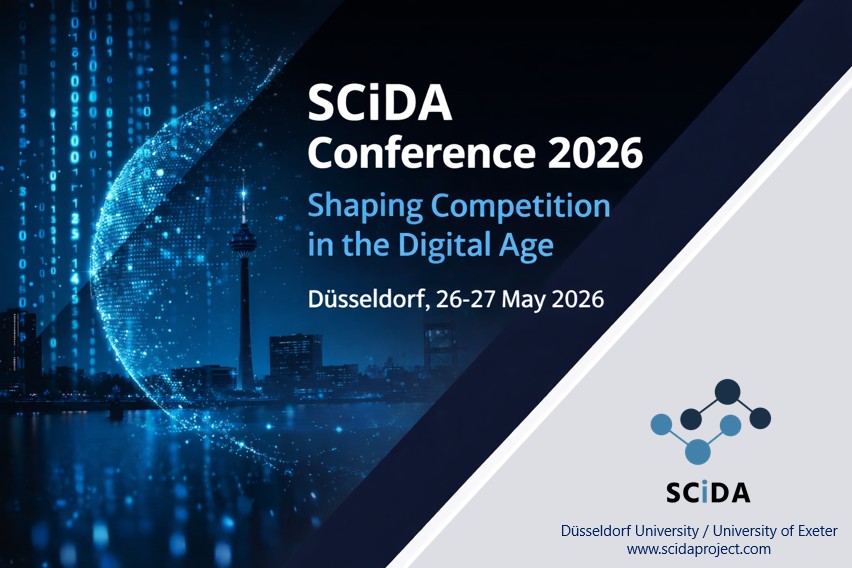
Save the Date: SCiDA Conference 2026
The research project „Shaping Competition in the Digital Age“ (SCiDA), a joint project of the Universities of Düsseldorf and Exeter, invites you to a conference in Düsseldorf! The two-day conference will explore the lessons, challenges, and opportunities arising from competition regulation and enforcement in digital markets across the EU, the UK, and Germany. Bringing together researchers, policymakers, and practitioners, it aims to promote a challenge- and solution-oriented dialogue on the present and future of digital competition law.
Date: 26-27 May 2026, University House (Haus der Universität), Shadowplatz 14, 40212 Düsseldorf, Germany
Registration for the conference opens in February.
Click here for information on the conference on the SCiDA project website!
AI on the Enforcer’s Radar
So, back to the original question: what does the future hold for competition law? For McCallum, the focus is on reforming Regulation 1/2003 in order to have the right tools for effective enforcement at hand in the future. There is no longer any interest in harmonising national reinforcements of competition law, such as relative market power in Sec. 20 GWB.
However, there is still work to be done on the EU procedural rules for interim measures. This is demonstrated by the case of the integration of Meta AI into WhatsApp: while the Italian competition authority imposed “interim measures” against Meta within four weeks, the Commission did not due to procedural hurdles. It is important that the Commission nevertheless takes action against restrictions of competition in AI markets. McCallum pointed to the investigations into the extension of the DMA to the cloud services AWS and Azure, and recalled the two proceedings concerning Google’s use of third-party content for AI overviews and AI training, as well as the aforementioned exclusive integration of Meta AI into WhatsApp.
AI is also a focus for the Bundeskartellamt. Andreas Mundt sees competition problems primarily in the cloud market (“almost the entire world depends on just three providers”), access to high-quality data and the relevance of foundation models. These areas are being examined very closely under Section 19a GWB. Perhaps a vague announcement of new cases? In any case, the Bundeskartellamt is coordinating excellently with the Commission, and the parallel existence of the DMA and Section 19a GWB is an absolute advantage that has led to an unprecedented level of cooperation between the two authorities.
Private Enforcement – A gift that keeps on giving
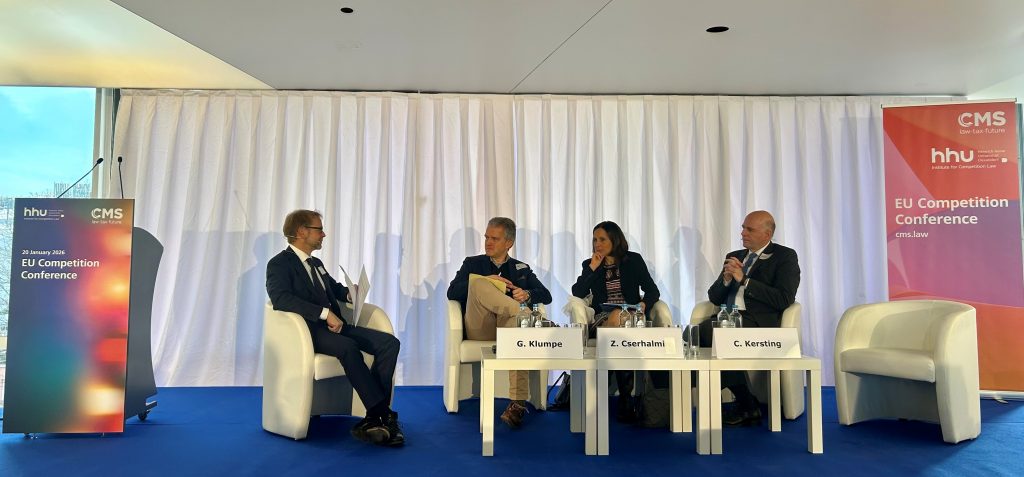
From Düsseldorf’s perspective, the panel on private enforcement was top-class: Gerhard Klumpe and Christian Kersting, two Düsseldorf antitrust legends, discussed the rapid developments in private antitrust enforcement in Europe with Zsuzsa Cserhalmi from the Commission.
There was initial agreement that private enforcement is a booming business. The number of cases is rising significantly in many Member States. However, Klumpe urged caution, saying that the development is highly fragmented and fragile in some areas. The tension between private and public enforcement, which could become even more significant in the future, was also highlighted.
Cserhalmi referred to more than 10,000 damages decisions across Europe – a clear success for the Damages Directive. At the same time, there were considerable differences between Member States: while countries such as Germany, the Netherlands and Spain are “giants” in this field, others have virtually no cases.
According to Klumpe, the biggest challenge is still the quantification of damages. Judges are massively overburdened, given the volume of proceedings. His urgent appeal to practitioners: “Have mercy!” – please no 500-page briefs shortly before the oral hearing. From the floor, moderator Tim Reher (CMS Hamburg) spontaneously responded: “Wish is granted.”
Looking ahead, Kersting identified three key developments: Firstly, the CJEU ruling in “Nissan Iberia” on the limitation period based on knowledge – a significant step for private enforcement. Secondly, the question of the recoverability of cartel fines, which, in his view, is required under European law. Thirdly, the as yet unresolved question of whether cartel damages give rise to a uniform claim for damages or whether there are several legally independent claims.
Kersting argued – once again – for genuine collective enforcement and for his model of leniency privileges in internal relations. Klumpe described the possibility of a uniform claim for damages for cartel damages as a “game changer” for the courts. Cserhalmi remained very pragmatic and, above all, called for more resources for the judiciary.
Finally, the question of liability allocation among joint and several debtors was discussed – the perfect cue for Kersting to casually refer to his article on liability allocation, which was nominated for the Antitrust Writing Awards (18 G.C.L.R., Issue 3, pp. 79-89).
How expensive is it to delete a WhatsApp message?
Throughout the day, there were practical insights that you should not miss out on:
- The panel on abuse of dominance (including Amélie Lavenir from LVMH) focused on the topic of legal certainty. Even after the draft guidelines, what is meant by the term “competition on the merits” remains a mystery. No one can say what market-dominating companies are actually allowed to do. The length of proceedings was also discussed: “No one wants to see 14 years of investigations,” concluded Alvaro Ramos from Qualcomm.
- The case files are getting thicker and thicker. On average, the Commission has 15,000 documents per file, said Murat Duman (CMS), and redacting files before they are made available takes an average of 2,000 hours per case. The excessive collection of data through “remote inspections” must be prevented. There is therefore a need for reform of Regulation 1/2003.
- The EU is considering passing new regulation that could address unilateral export restrictions (territorial supply constraints – from Mondelez with love) as an obstacle to the internal market, even below the dominance threshold. Such a regulation was recently introduced in Switzerland and is currently being tested there, according to Marquard Christen (CMS Zurich) and Michael Bauer (CMS Brussels).
- In recent years, the CJEU and the General Court have increasingly declared dawn raids invalid because they were carried out on the basis of insufficient evidence. Aida Oviedo and Peter Giese (CMS) concluded: “It’s always worth appealing.” However, during the inspection, one should cooperate fully, unlike in the International Flavours & Fragrances case. A senior executive had quickly deleted a WhatsApp message, which cost the company dearly: a fine of almost €16 million for obstructing the investigation.
- The reform of the Foreign Direct Investment Screening Regulation will not bring definitive clarity for companies of strategic relevance: there will continue to be significant differences between member states in terms of FDI screening. At least, that was the tenor of a session with Kai Neuhaus, Aiste Sleseviciute (DG Trade) and Alysson Havard (Belgian Interfederal Screening Committee).
- Foreign Subsidies Control is intended to curb market distortions caused by foreign-subsidised companies. However, Björn Herbers, Virginie Dor and Jörn Eickhoff (Siemens Energy) suspect that there will be more bureaucracy in M&A business. The low thresholds in the regulation were particularly criticised. It cannot be right that “every pen” has to be registered. The term “foreign financial contribution” is far too broad.
Digital Regulation on Cloud Nine
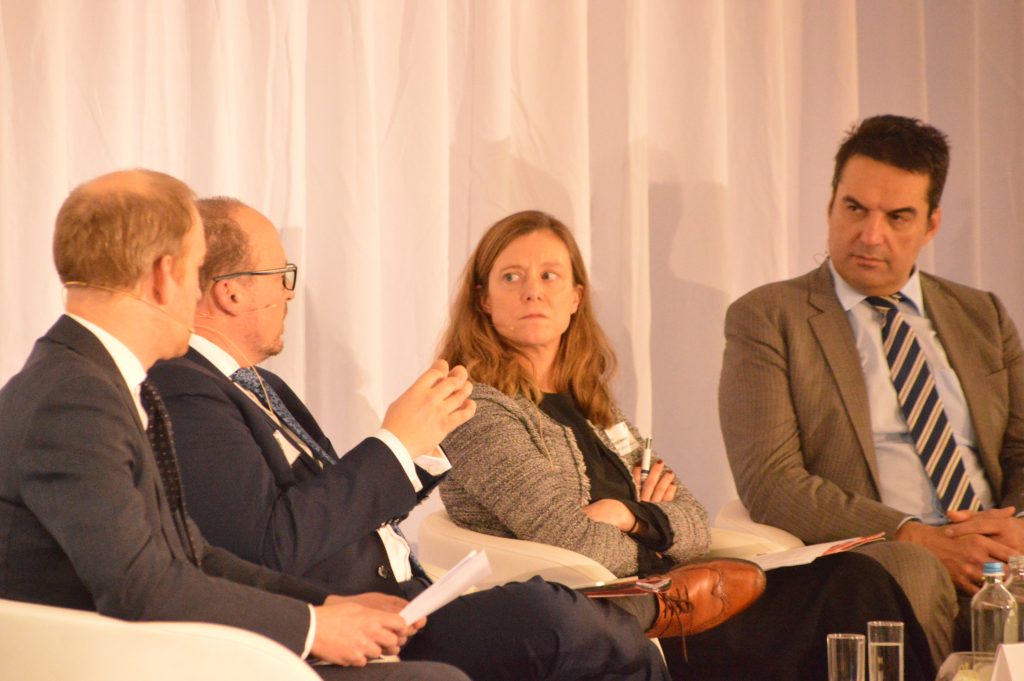
European digital regulation has admirers, such as Microsoft, which Nicholas Banasevic has named an “exemplary gatekeeper”. He should know, after all, he worked at DG COMP until 2021 and was involved in drafting the DMA. He now works for Microsoft. The company expressly welcomes European digital regulation, saying it brings clarity and predictability.
Microsoft, the compliance role model? That could change soon if the cloud business Microsoft Azure is designated under the DMA. This also seemed to worry Banasevic: “We should remember what the DMA is for and what not” – for Microsoft, the cloud probably falls under “not”, because, unlike Andreas Mundt, Banasevic believed that the cloud market was “quite competitive” and, as a classic input market, not suitable for platform regulation.
Mathias Traub from Bosch also likes the DMA, and he had no doubt that the cloud should be on the agenda of competition authorities. Bosch is grateful for the DMA and benefits from its application. In his view, greater involvement of market participants in decision-making would be desirable.
Elodie Vandenhende (Autorité de la Concurrence) wanted to see faster enforcement of competition law, including through interim injunctions, and an expansion of her Digital Economy Unit to improve understanding of technical innovations. Some aspects of her GenAI sector inquiry (2024) were already outdated, but they were conducting further studies “to come back and catch up”.
Closing Ceremony and Conference dinner: Heine and Hogwarts
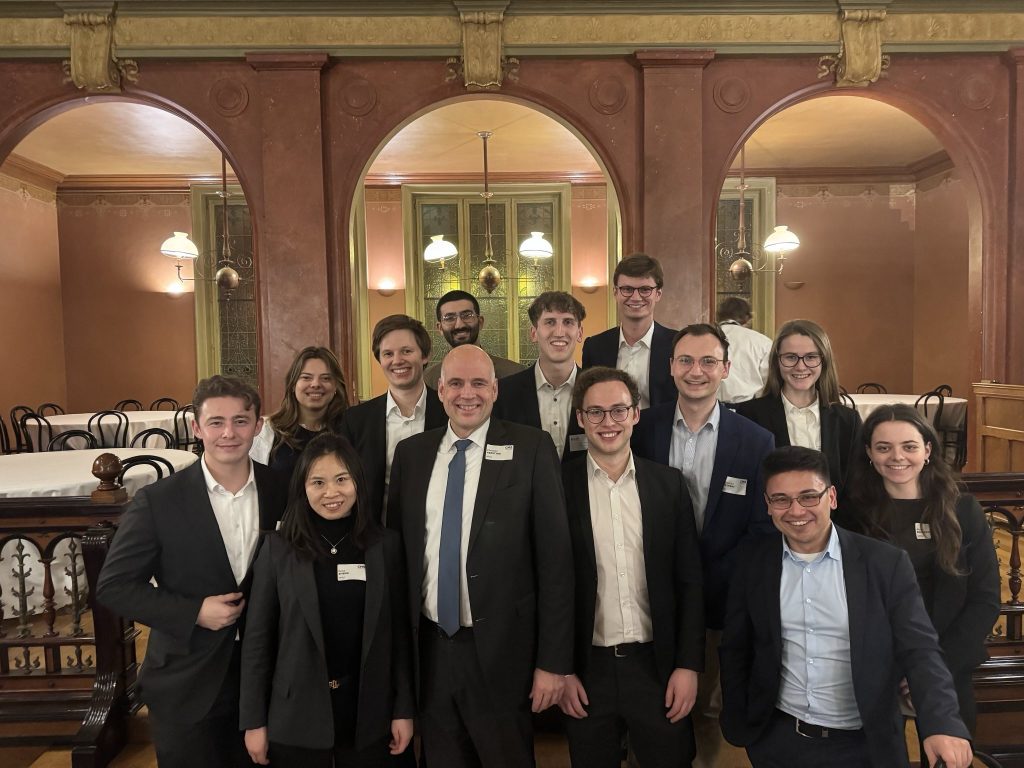
The conference came to a grand finale with dinner at the historic Solvay Library in Brussels. The atmosphere, with its high ceilings, endless bookshelves, and palpable history, was almost magical, evoking associations with Hogwarts. The Harry Potter vibes were justified. During dinner, there was less talk about competition than there was whispering about the fact that Chris Watson‘s main job is actually being the father of Hermione Granger (or more precisely, her actress Emma Watson). (He also works part-time as a partner at CMS in London.)
In his dinner speech, Michael Bauer praised Heinrich Heine University Düsseldorf as one of Europe’s leading educational institutions for magic competition law. We were happy to hear it.
Brussels and Düsseldorf, practice and academia – or in short: Brüsseldorf. The EU Competition Conference is a prime example of the living connection between practice and academia. We are already looking forward to the next alarm clock ringing at four in the morning and the trip on the Hogwarts Express – pardon, the Eurostar – to Brussels!



Klara Dresselhaus, Sofia Schulz and Sebastian Steinert are doctoral students at the Institute for Antitrust Law at Heinrich Heine University Düsseldorf.
Feel free to recommend the D’Kart blog to your colleagues! If you don’t want to miss any posts on our D’Kart blog, subscribe to our newsletter here.